Gourmet mushrooms are far more forgiving than many people think—if you respect their species‑specific needs and basic lab discipline. This guide focuses on three excellent species for serious home growers and hobby mycologists:
Overview
- Lion’s Mane (Hericium erinaceus)
- Oyster Mushrooms (Pleurotus spp., with a focus on blue/pearl)
- Chestnut Mushrooms (Pholiota adiposa / P. nameko group)
You’ll get species‑specific parameters, step‑by‑step technique from culture to harvest, and realistic troubleshooting grounded in real-world grows.
1. Core Lab Principles for All Gourmet Species
Before going species‑by‑species, align on some non‑negotiables.
1.1 Sterile Work Setup
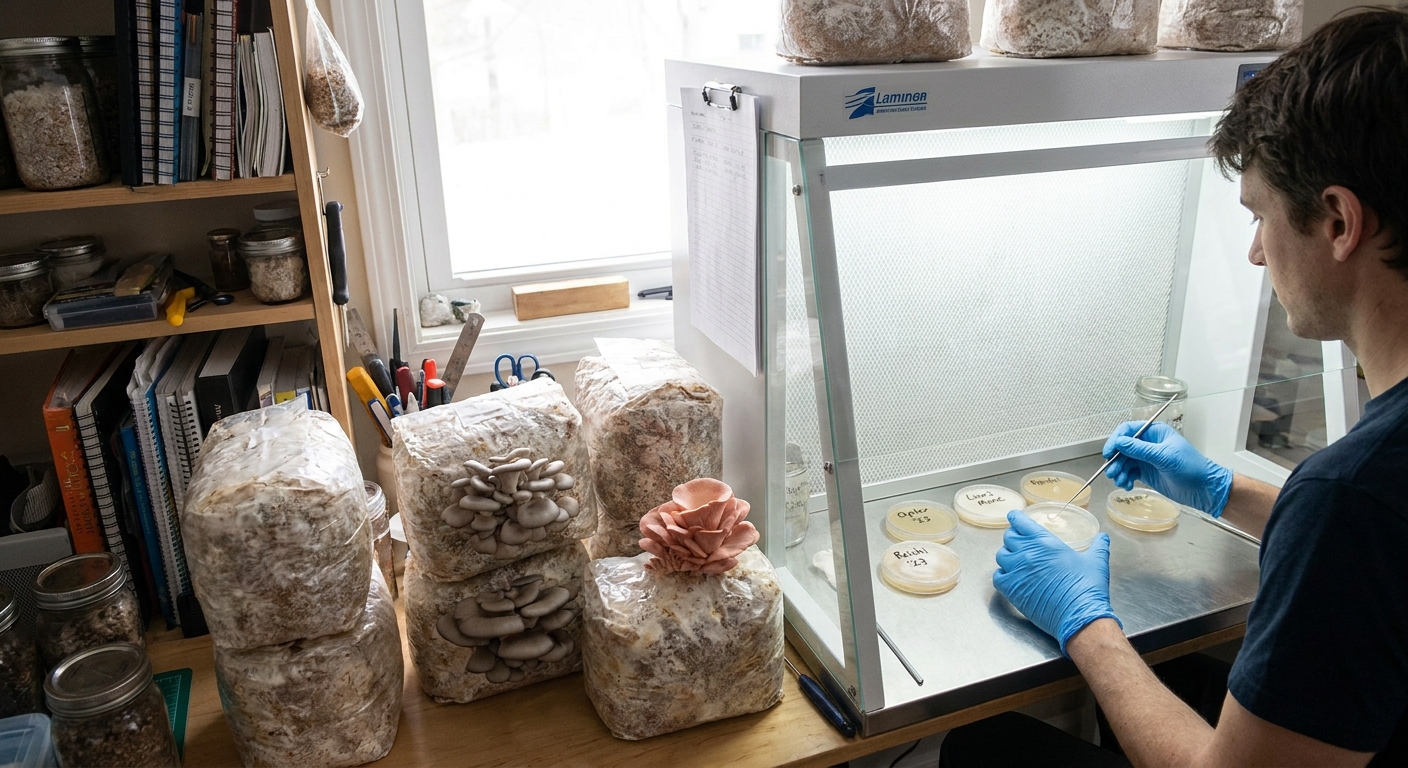
You don’t need a full lab to grow clean mushrooms, but you do need control.
Minimum viable sterile setup:
- Still air box (SAB) or basic flow hood
- 70% isopropyl alcohol in a spray bottle
- Paper towels or lab wipes
- Butane/alcohol lamp for flame sterilizing
- Latex/nitrile gloves and face mask
SAB workflow:
- Wipe all tools and container exteriors with 70% alcohol.
- Place everything inside SAB, wait 5–10 minutes for air to calm.
- Flame sterilize scalpels/needles until red-hot; cool by touching to sterile agar or grain.
- Keep movements slow and deliberate; avoid talking over open plates/jars.
1.2 Clean Spawn is 80% of the Battle
Regardless of species, prioritize spawn quality.
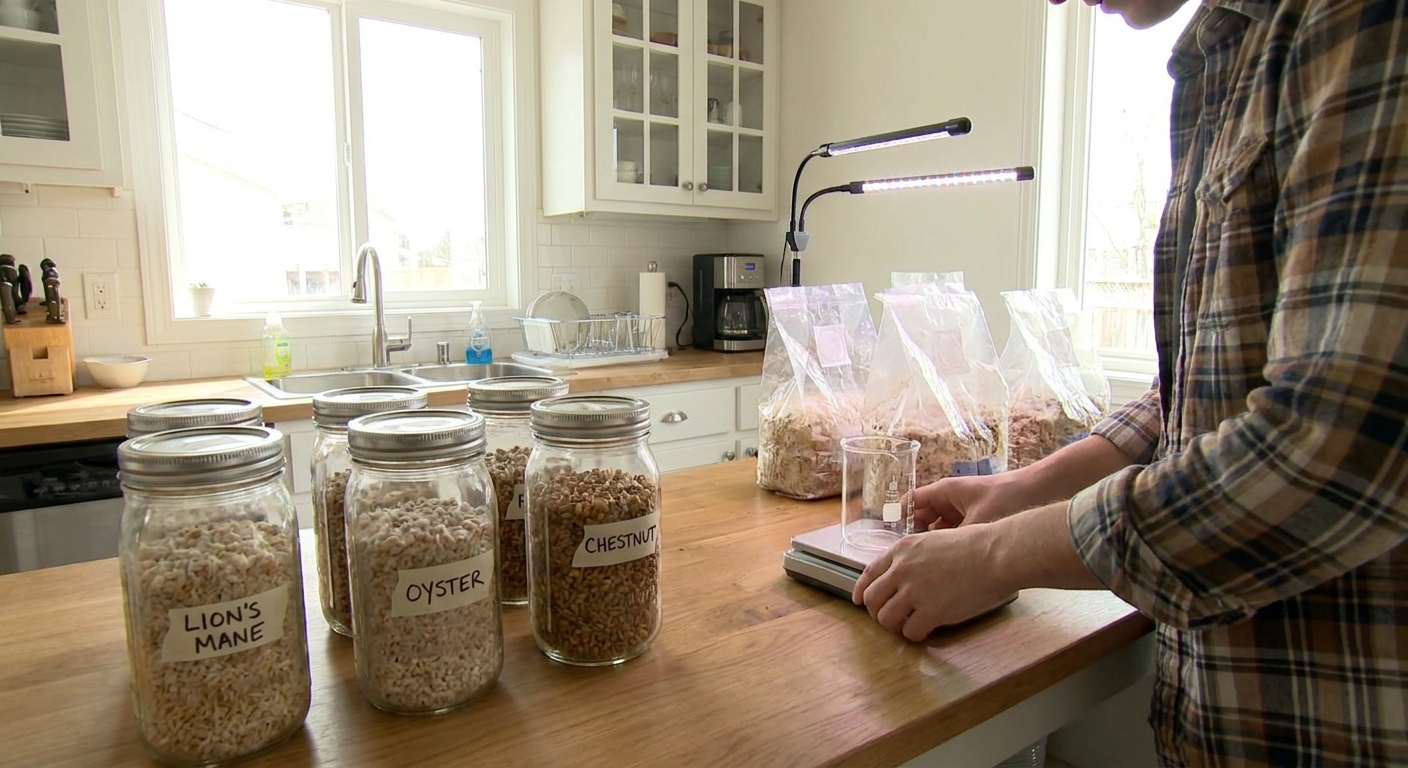
Grain spawn basics (per 1 L jar):
- 600–650 g hydrated grain (wheat, rye, millet, or oats)
- Hydrate to where kernels are fully swollen but not bursting; surface dry, no standing water.
- Pressure cook at 15 PSI for 90–120 min depending on jar size.
- Inoculate with agar wedge or liquid culture in SAB or under flow hood.
- Incubate at species‑appropriate temps (see sections below), shaking at ~20–30% colonization.
If your spawn is dirty, no substrate or fruiting chamber will save the project.
2. Lion’s Mane (Hericium erinaceus)
Lion’s Mane is a dense, toothed mushroom with excellent culinary and medicinal value. It’s slightly more sensitive than oysters but still very manageable.
2.1 Culture and Spawn
Ideal temps:
- Mycelial growth: 20–24°C (68–75°F)
- Fruiting: 16–20°C (60–68°F)
Key notes:
- Prefers supplemented hardwood sawdust, low on open-air contamination resistance.
- Mycelium appears thick, white, almost cottony. Off-white or translucent is usually fine; yellowing can indicate stress or age.
Spawn tips:
- Use hardwood-based liquid culture or clean agar wedge.
- Colonization is slower than oysters; 2–3 weeks per grain jar is common.
- If grain smells sour, sweet, or alcoholic: discard.
2.2 Substrate Recipe (5–6 lb block)
A standard lion’s mane block:
- 50% hardwood sawdust
- 50% hardwood fuel pellets (hydrated) or more sawdust
- 18–20% bran (wheat or rice bran) by dry weight
- Target 60–65% moisture
Example:
- 1.5 kg hardwood sawdust
- 350 g bran
- 1.2–1.4 L water (adjust for actual sawdust absorption)
Mix thoroughly, bag in 0.2 µm filter grow bags, and sterilize at 15 PSI for 2.5–3 hours. Let cool overnight before inoculation with 10–20% spawn by weight.
2.3 Incubation and Fruiting
- Incubate at 21–23°C (70–73°F) in the dark or low light.
- Full colonization: 2–3 weeks. Blocks should be fully white and slightly firm.
Fruiting conditions:
- Temp: 16–20°C (60–68°F)
- RH: 90–95%
- FAE: Moderate; lion’s mane is CO₂‑sensitive.
- Light: Indirect light, 12/12 is fine; not picky.
Block prep:
- Make a single X‑cut or slit on one side of the bag at colonization.
- Avoid peeling the whole bag off; keep surface microclimate stable.
2.4 Common Problems
- Long, shaggy spines, thin fruit, or coral-like blobs:
- Cause: High CO₂, low FAE.
- Fix: Increase fresh air by more venting, fanning, or additional holes in fruiting chamber.
- Dry, crusted surface:
- Cause: Low humidity or direct airflow.
- Fix: Increase RH; ensure misting doesn’t directly blast primordia.
- Yellowing fruitbody:
- Cause: Overmature or drying out.
- Fix: Harvest earlier when spines are 0.5–1 cm long and still white.
3. Oyster Mushrooms (Pleurotus spp.)
Oysters are aggressive colonizers and ideal for newer growers who still want gourmet results.
3.1 Which Oyster to Start With
- Blue/Columbinus and Pearl oysters: Great for indoor growing at 16–22°C (60–72°F).
- Pink and yellow oysters: Faster but more temperature-sensitive and fragile.
3.2 Substrate Options
Option A – Pasteurized Straw (simpler, slightly dirtier)
- Chop straw to 2–5 cm pieces for faster colonization.
- Pasteurize in 65–70°C (149–158°F) water for 1–2 hours.
- Drain to field capacity (a firm squeeze yields a few drops, not a stream).
- Spawn at 5–10% spawn rate (w/w) into filter bags or buckets with holes.
Option B – Sterilized Hardwood + Supplements (higher yield)
- 70–80% hardwood sawdust or fuel pellets
- 10–20% bran
- 10% additional fiber (soy hulls or straw pellets) if available
Sterilize at 15 PSI for 2–2.5 hours. Cool, then inoculate with 10–20% grain spawn.
3.3 Parameters
- Mycelial growth: 20–24°C (68–75°F)
- Fruiting (blue/pearl): 15–20°C (59–68°F)
- RH: 90–95% for pinning, 85–90% for growth
- FAE: High. Oysters are CO₂‑intolerant.
- Light: Moderate, like an overcast day (500–1500 lux).
3.4 Fruiting Technique
- Incubate bags or buckets at 21–23°C until fully colonized and just starting to form primordia under plastic (7–14 days depending on temp and spawn rate).
- Cut 3–6 slits per bag or expose pre-drilled bucket holes.
- Place in fruiting space with high RH and good FAE.
3.5 Common Problems
- Long stems, tiny caps, and funky shapes:
- Cause: High CO₂.
- Fix: Increase ventilation; add more holes; reduce population density in fruiting chamber.
- Yellowing, dry edges on caps:
- Cause: Low humidity or strong direct fan.
- Fix: Increase RH, diffuse airflow, or partially block fan.
- Green mold (Trichoderma) on substrate surface:
- Cause: Weak spawn or insufficient pasteurization/sterilization.
- Fix: Improve spawn cleanliness; respect pasteurization temps/time; increase spawn rate.
4. Chestnut Mushrooms (Pholiota adiposa / P. nameko group)
Chestnuts are beautiful caramel‑brown clusters with nutty flavor and good shelf life. They demand more patience and cleaner practices than oysters.
4.1 Culture and Spawn
Ideal temps:
- Mycelial growth: 20–23°C (68–73°F)
- Fruiting: 12–18°C (54–64°F)
Mycelium appearance:
- Often lighter and more wispy than lion’s mane or oysters.
- Can show pale yellow metabolites on high‑nutrient agar; not always contamination.
Spawn them on rye or millet for relatively quick colonization and even distribution.
4.2 Substrate and Sterilization
Chestnuts perform well on enriched hardwood blocks.
Recipe (per 5–6 lb block):
- 70% hardwood sawdust/pellets
- 20% bran
- 10% additional fiber (soy hulls, wheat middlings, or fine straw)
- Moisture 60–65%
Sterilize thoroughly at 15 PSI for 3 hours—chestnut substrates are nutritious and attractive to contaminants.
Spawn at 15–20% spawn rate for faster colonization and less contamination window.
4.3 Incubation and Fruiting
- Incubate at 20–23°C in the dark or low light.
- Colonization can take 3–4 weeks; be patient.
When fully white:
- Consider a cold shock: 2–4°C (35–39°F) for 24–48 hours (optional but often helpful).
- Cut the top of the bag off or open a large side panel.
- Place in fruiting at 12–18°C, 90–95% RH initially.
As pins develop and caps expand, you can drop RH slightly (to 85–90%) to reduce bacterial blotch.
4.4 Common Problems
- Stalled or slow colonization with yellowing patches:
- Cause: Old spawn, temps too low, or bacterial load.
- Fix: Use fresher spawn; maintain 20–23°C; increase sterilization time.
- Slimy caps or ‘wet spots’:
- Cause: Surfaces staying wet; high RH with little air movement.
- Fix: Increase FAE; reduce misting directly on caps; lower RH a few percent.
- Overlay (tough surface mycelium that won’t pin):
- Cause: Over-incubation, high CO₂ without fresh air signals.
- Fix: Introduce fruiting conditions earlier; score the surface lightly with a sterile tool when changing to fruiting.
5. Contamination Diagnosis Across Species
A realistic lab‑minded grower assumes contamination will happen sometimes.
Common signs and responses:
- Bright green powder (Trichoderma):
- Highly competitive. If on grain: discard. If on block edge: isolate and monitor; often not worth saving for beginners.
- Black, fuzzy, ‘spider‑web’ molds:
- Often Aspergillus or similar. Discard; don’t fruit indoors.
- Sour, ‘feet’ or vomit smell from grain:
- Bacteria. Don’t attempt to fruit; sterilize and discard.
When in doubt, prioritize your air quality and future projects over salvaging a dirty block.
6. Practical Yield Expectations
Assuming decent technique and clean spawn:
- Lion’s Mane:
- 5–6 lb block → 1–1.5 lb total over 2–3 flushes.
- Oysters:
- 5–6 lb block (hardwood) → 1.5–2+ lb total over 2–3 flushes.
- 5–6 lb straw log → 0.8–1.5 lb depending on spawn rate.
- Chestnuts:
- 5–6 lb block → 0.8–1.5 lb total, typically 1–2 flushes.
If you’re consistently below these ranges, review:
- Spawn quality
- Substrate nutrition and moisture
- Fruiting conditions (especially FAE and RH)
7. Building a Repeatable Home Lab Routine
To make these species reliable rather than lucky:
- Standardize recipes: Keep substrate formulations and spawn ratios written down.
- Log parameters: Record temps, RH, and colonization times.
- Photograph stages: Visual records make troubleshooting much easier.
- Change one variable at a time when optimizing.
With basic sterile work and species‑specific tuning, lion’s mane, oysters, and chestnut mushrooms can become predictable, high‑yielding regulars in your home lab.